
Keeping your baby’s water bottle clean may seem like a simple parenting task, but it plays a significant role in protecting your child’s health. Babies have developing immune systems that are more vulnerable to bacteria, mold, and other contaminants that can grow inside feeding accessories. Even when a bottle contains only water, moisture can create an environment where germs multiply if proper cleaning habits are not followed.
Many parents assume that because water looks clean, the bottle does not need frequent washing. However, a baby’s saliva enters the bottle during drinking, introducing bacteria that can remain on the bottle’s interior surfaces. Over time, these microorganisms can multiply and potentially affect your baby’s health.
The good news is that maintaining proper bottle hygiene does not have to be complicated. By understanding how often to wash a baby’s water bottle, when sanitizing is necessary, and which cleaning methods are most effective, parents can greatly reduce the risk of contamination.
In this comprehensive guide, you’ll learn how often baby water bottles should be washed, the best cleaning practices, common mistakes to avoid, and expert tips for keeping your baby’s drinking equipment safe and hygienic.
Why Cleaning Your Baby’s Water Bottle Matters
Bacteria Can Grow Faster Than Many Parents Realize
A baby water bottle is frequently exposed to moisture, warmth, and saliva. These conditions create an ideal environment for bacteria to grow. Even if a bottle appears clean, microscopic organisms can remain on its surfaces. Every time a baby drinks from a bottle, bacteria from their mouth are transferred back into the bottle. If the bottle sits for several hours without being cleaned, these bacteria may multiply rapidly.
Research has shown that moist environments can support the growth of various microorganisms, particularly when cleaning routines are inconsistent. While healthy older children may have stronger immune defenses, infants are still developing their ability to fight infections, making hygiene especially important during the first years of life.
Leftover Residue May Affect Your Baby’s Health
Water bottles used for milk, formula, juice, or flavored drinks require even more attention. Small amounts of residue can cling to bottle walls, nipples, valves, and straws. These residues may not always be visible, but they can serve as food sources for bacteria and mold.
When residue accumulates over time, it can lead to unpleasant odors, discoloration, and microbial contamination. In some cases, mold can develop in hidden areas such as silicone valves or straw attachments. Proper washing removes these residues before they become a problem.
Babies Have Developing Immune Systems
Unlike adults, babies have immune systems that are still learning to recognize and combat harmful microorganisms. This means that contamination levels that might not affect an adult could potentially cause illness in an infant.
Regular bottle cleaning helps reduce exposure to germs and supports overall health. Consistent hygiene habits are particularly important during the newborn stage, periods of illness, and when babies attend daycare or spend time in public settings.
How Often Should You Wash Your Baby’s Water Bottle?
The Short Answer
In most situations, a baby’s water bottle should be washed after every use. This recommendation applies regardless of whether the bottle contains water, milk, formula, or juice. Washing after each use removes saliva, residue, and bacteria before they have an opportunity to multiply.
Although this may sound excessive to some parents, daily washing is one of the simplest and most effective ways to maintain a safe drinking environment for babies and young children.
When the Bottle Contains Only Water
If your baby’s bottle contains only plain water, the contamination risk is generally lower than with milk or formula. However, saliva still enters the bottle during drinking sessions. As a result, simply refilling the same bottle repeatedly without washing it is not recommended.
Most pediatric hygiene experts suggest rinsing the bottle after each use and performing a thorough wash at least once daily. If the bottle has been sitting for several hours, especially in warm temperatures, a complete wash is the safest approach.
When the Bottle Contains Formula, Milk, or Juice
Formula, breast milk, and juice provide nutrients that bacteria can use to grow. Because of this, bottles containing these liquids should be washed immediately after feeding whenever possible.
Allowing milk residue to sit inside a bottle for extended periods increases the likelihood of bacterial growth and makes cleaning more difficult. Prompt washing helps prevent stains, odors, and contamination.
Recommended Cleaning Frequency
| Bottle Use | Recommended Cleaning Frequency |
| Plain water | Rinse after use and wash daily |
| Formula milk | Wash immediately after every feeding |
| Breast milk | Wash immediately after every use |
| Juice | Wash immediately after every use |
| Sick baby use | Wash and sanitize after every use |
| Daycare bottles | Wash daily and sanitize regularly |
While these recommendations provide a general guideline, parents should always consider their child’s age, health condition, and specific circumstances. Younger infants and babies with weakened immune systems may benefit from more frequent sanitizing practices.
Signs Your Baby’s Water Bottle Needs Immediate Cleaning
Unpleasant Odors
A clean bottle should have little to no smell. If you notice sour, musty, or unusual odors, bacteria or residue may be present. Persistent odors often indicate that a thorough cleaning is overdue.
Cloudy Appearance
Bottle surfaces should remain clear and transparent. A cloudy film can develop from mineral deposits, dried residue, or improper rinsing. This buildup should be removed promptly to maintain hygiene.
Sticky Texture
A bottle that feels sticky or slippery after rinsing likely contains residue that was not completely removed during previous washes. This is a clear indication that deeper cleaning is necessary.
Visible Mold or Discoloration
Mold growth is one of the most serious warning signs. Dark spots around bottle components, nipples, straws, or silicone seals require immediate attention. If mold cannot be completely removed, replacing the affected parts is often the safest solution.
The Correct Way to Wash a Baby’s Water Bottle
Cleaning a baby water bottle properly involves more than simply rinsing it under running water. Many bacteria and residues can remain hidden in small crevices, nipples, valves, and straw attachments. Following a thorough cleaning process helps ensure that all parts of the bottle remain safe for your baby to use.
Step 1: Disassemble Every Part
Before washing, separate all removable components of the bottle. This includes caps, nipples, silicone seals, valves, straws, handles, and any other detachable pieces. Bacteria often accumulate in areas that are difficult to see, making disassembly an essential step in the cleaning process.
Many parents clean only the bottle itself while overlooking smaller components. Unfortunately, these hidden areas are often where mold and residue are most likely to develop.
Step 2: Rinse With Warm Water
Rinse each component under warm running water as soon as possible after use. Prompt rinsing helps remove saliva, milk residue, and other contaminants before they dry onto the bottle’s surfaces.
Avoid allowing used bottles to sit for extended periods, especially if they contained milk or formula. Dried residue becomes more difficult to remove and may encourage bacterial growth.
Step 3: Wash With Baby-Safe Dish Soap
Apply a gentle dishwashing liquid and thoroughly clean all bottle components using warm water. Ensure that every interior and exterior surface is scrubbed properly. Pay particular attention to threading, bottle necks, and attachment points where residue often accumulates.
Choose cleaning products designed for food-contact surfaces and avoid harsh chemicals that may leave unwanted residues.
Step 4: Scrub Hard-to-Reach Areas
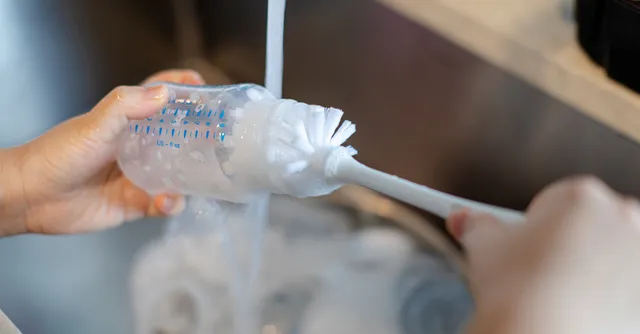
Bottle brushes and nipple brushes are useful tools for reaching areas that cannot be cleaned effectively by hand. These tools help remove hidden buildup from narrow openings and corners where bacteria may linger.
Inspect all components carefully during cleaning. If residue remains visible after washing, repeat the cleaning process until the bottle is completely clean.
Step 5: Rinse Thoroughly
After washing, rinse all parts thoroughly under clean running water. Soap residue can affect taste and may irritate sensitive infants. Ensure every trace of detergent is removed before reassembling the bottle.
Step 6: Air Dry Completely
Place bottle parts on a clean drying rack and allow them to air dry completely before storage. Moisture trapped inside sealed containers can encourage bacterial and mold growth. Proper drying is just as important as proper washing.
Should You Sanitize Your Baby’s Water Bottle Every Day?
Many parents wonder whether daily sanitizing is necessary in addition to routine washing. The answer depends largely on your baby’s age, health status, and individual circumstances.
Newborns and Young Infants
For newborns and babies younger than three months, sanitizing bottles regularly is often recommended. At this stage, babies have highly developing immune systems and may benefit from additional protection against harmful microorganisms.
Regular sanitizing can provide extra reassurance, particularly for babies born prematurely or those with specific health concerns.
Older Babies
As babies grow older and begin exploring their environment, routine washing may be sufficient for many healthy children. Once babies reach six months and beyond, many parents transition to thorough washing with periodic sanitizing as needed.
However, maintaining excellent cleaning practices remains essential regardless of age.
Situations That Require Extra Sanitizing
Certain situations call for increased sanitization efforts. These include periods when a baby is sick, after travel, during outbreaks of illness within the household, or when bottles have been exposed to potentially contaminated environments.
Parents may also choose to sanitize bottles after purchasing new equipment or when introducing previously stored feeding accessories back into regular use.
When Sanitizing Is Recommended
| Situation | Sanitizing Recommended? |
| Newborn under 3 months | Yes |
| Premature baby | Yes |
| Healthy baby over 6 months | Usually optional |
| After illness | Yes |
| Shared bottle accidentally | Yes |
| Travel use | Recommended |
| New bottle before first use | Yes |
Common Mistakes Parents Make When Cleaning Baby Bottles
Only Rinsing Instead of Washing
One of the most common mistakes is assuming that rinsing removes all contaminants. While rinsing can remove some visible debris, it does not effectively eliminate bacteria, residue, or biofilm that may form on bottle surfaces.
Forgetting Bottle Nipples and Valves
Small components are often overlooked during cleaning. Because these areas frequently come into contact with liquids and saliva, they require the same level of attention as the bottle itself.
Ignoring these components can lead to hidden contamination even when the main bottle appears clean.
Using Dirty Sponges
Cleaning tools themselves can harbor bacteria. Old kitchen sponges are known for containing large numbers of microorganisms. Parents should regularly replace bottle-cleaning brushes and allow them to dry completely between uses.
Storing Bottles Before They Are Dry
Even a thoroughly washed bottle can become contaminated if stored while still damp. Trapped moisture creates favorable conditions for mold and bacterial growth.
Waiting Too Long Before Cleaning
Leaving used bottles unattended for hours increases the likelihood of residue buildup and bacterial multiplication. Cleaning promptly after use makes the process easier and more effective.
How Different Bottle Materials Affect Cleaning Needs
Different bottle materials offer unique advantages and cleaning considerations.
Plastic Bottles
Plastic bottles are lightweight and affordable, making them popular among parents. However, they may absorb odors over time and can develop scratches that harbor bacteria if cleaned aggressively.
Glass Bottles
Glass bottles are highly resistant to staining and odor retention. Their smooth surfaces make them easier to clean thoroughly, although they tend to be heavier and more fragile than plastic alternatives.
Stainless Steel Bottles
Stainless steel bottles are durable and resistant to many forms of damage. They are often easy to clean and maintain, making them a popular option for older babies and toddlers.
Silicone Bottles
Silicone bottles offer flexibility and durability. While generally easy to clean, they may occasionally retain odors if not washed thoroughly.
Comparison of Bottle Materials
| Material | Durability | Ease of Cleaning | Odor Resistance | Typical Lifespan |
| Plastic | Moderate | Good | Moderate | Moderate |
| Glass | High | Excellent | Excellent | Long |
| Stainless Steel | Very High | Excellent | Excellent | Very Long |
| Silicone | Good | Good | Good | Moderate |
How to Clean Baby Water Bottles While Traveling
Traveling often presents challenges when maintaining bottle hygiene. Planning ahead can help ensure your baby’s bottles remain clean and safe throughout the trip.
Hotel Stays
When staying in hotels, wash bottles immediately after use using hot water and dish soap. If available, use bottle sanitizers or portable sterilization equipment designed for travel.
Air Travel
Bring extra bottles whenever possible so that you have clean backups available during flights. Travel-sized cleaning supplies can help maintain hygiene while on the move.
Road Trips
Long car journeys often involve multiple feeding sessions. Carry a dedicated cleaning kit that includes brushes, soap, and access to clean water whenever possible.
Emergency Cleaning Solutions
If thorough washing facilities are temporarily unavailable, rinse bottles thoroughly and clean them properly at the earliest opportunity. Emergency cleaning should only be considered a short-term solution.
When Should You Replace Your Baby’s Water Bottle?
Even the best-maintained bottles eventually require replacement.
Cracks and Damage
Cracks create tiny spaces where bacteria can hide. Damaged bottles should be replaced promptly to maintain hygiene and safety.
Persistent Odors
If unpleasant odors remain despite thorough cleaning, the bottle material may have absorbed contaminants. Replacement is often the best solution.
Discoloration
Yellowing, cloudiness, or staining that cannot be removed may indicate wear and deterioration.
Worn-Out Components
Nipples, valves, straws, and seals experience significant wear over time. Replacing these parts regularly helps maintain proper function and cleanliness.
Expert Tips for Keeping Baby Water Bottles Hygienic
Developing a consistent cleaning routine is one of the most effective ways to protect your baby’s health. Wash bottles promptly after use, allow all components to dry completely, inspect parts regularly for signs of damage, and replace worn components before they become problematic.
Using dedicated bottle-cleaning tools can further improve hygiene by reducing cross-contamination from general kitchen equipment. Parents should also periodically inspect hard-to-see areas where mold or residue may develop unnoticed.
Finally, keeping multiple bottles available can make it easier to maintain proper cleaning schedules without feeling rushed during busy days.
Frequently Asked Questions
Q1. Can I wash my baby’s water bottle once a day?
If the bottle contains only water, washing at least once daily may be acceptable for many situations. However, bottles used repeatedly throughout the day should still be rinsed regularly and kept clean.
Q2. Is it safe to reuse a bottle without washing it?
Repeated reuse without washing is generally not recommended because saliva and bacteria can accumulate inside the bottle.
Q3. Do baby water bottles need sterilization every day?
Not necessarily. Daily sterilization is most important for newborns, premature infants, and babies with certain health concerns.
Q4. Can I clean baby bottles in the dishwasher?
Many bottles are dishwasher safe. Always follow the manufacturer’s instructions regarding dishwasher use and recommended cleaning settings.
Q5. What happens if a bottle is not cleaned properly?
Improper cleaning can allow bacteria, mold, and residue to accumulate, potentially increasing the risk of contamination.
Q6. How long can water stay in a baby bottle?
Fresh water should ideally be replaced daily. Bottles left sitting for long periods should be cleaned before reuse.
Q7. Can mold grow inside baby bottles?
Yes. Mold can develop in damp environments, especially within hidden components such as valves, straws, and seals.
Conclusion
So, how often should you wash your baby’s water bottle? In most cases, the safest answer is after every use. Even bottles used only for water can collect saliva and bacteria that accumulate over time. Consistent cleaning helps prevent contamination, supports your baby’s health, and extends the lifespan of feeding equipment.
For newborns and younger infants, regular sanitizing may provide an additional layer of protection. Older babies typically benefit from thorough washing combined with occasional sanitization when necessary. Regardless of age, prompt cleaning, complete drying, and routine inspection of bottle components remain essential habits for every parent.
By following proper cleaning practices and replacing worn-out parts when needed, parents can ensure that their baby’s water bottle remains a safe and hygienic source of hydration every day. A few extra minutes spent cleaning today can contribute significantly to your child’s comfort, safety, and overall well-being.
Read More Blogs: