
Many parents notice something fascinating during the first few months of their baby’s life: their little one often sleeps with both arms raised above their head. This posture can look surprisingly comfortable, even though many adults would find it awkward. If you’ve ever walked into your baby’s room and seen them peacefully sleeping with their arms stretched upward, you may have wondered whether it’s normal, healthy, or a sign of something that requires attention.
The good news is that in most cases, babies sleeping with their arms up is completely normal and is actually linked to natural newborn reflexes, muscle development, and comfort preferences. This sleeping position is so common that pediatricians encounter questions about it regularly from new parents. Understanding why babies sleep this way can provide reassurance and help you better understand your child’s development.
In this comprehensive guide, we’ll explore the reasons behind this sleeping position, the science behind infant sleep behavior, safety considerations, and situations where parents may need professional guidance.
Why Do Babies Sleep with Their Arms Up?
One of the primary reasons babies sleep with their arms up is a natural posture known as the “startle” or Moro reflex position. The Moro reflex is an automatic response that newborns are born with. When babies feel a sensation of falling, hear a sudden noise, or experience a change in position, they instinctively throw their arms outward and upward before bringing them back toward their body.
Even while sleeping, newborns may naturally rest in a position that resembles this reflex. Their nervous system is still developing, and many of their movements are involuntary. As a result, sleeping with raised arms often feels natural and comfortable.
Another reason is flexibility. Babies spend months curled inside the womb, where their joints, muscles, and ligaments develop differently from adults. Their bodies are naturally more flexible, allowing them to adopt sleeping positions that may appear unusual to grown-ups but are entirely comfortable for them.
The “Touchdown Position” Explained
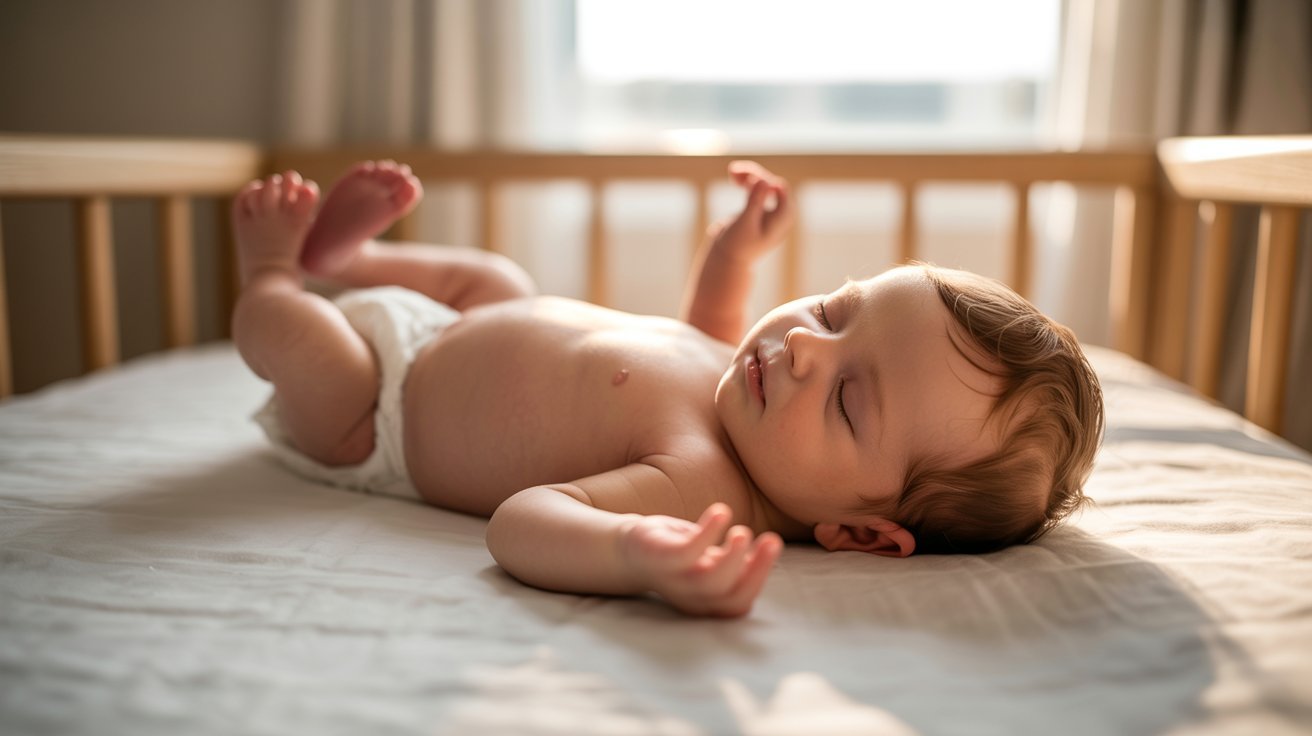
Many pediatric sleep experts refer to this posture as the “touchdown position” because it resembles a football referee signaling a touchdown. In this position, a baby lies on their back with both arms bent upward near the head.
Parents often notice this posture during deep and restful sleep stages. Interestingly, babies may remain in this position for extended periods without discomfort because their muscle tone and body proportions differ significantly from those of adults.
The touchdown position is particularly common during the newborn stage and early infancy. As babies grow older and gain greater control over their muscles, their sleeping positions become more varied.
Common Reasons Babies Prefer Sleeping with Arms Raised
The following table summarizes the most common reasons infants sleep with their arms up.
| Reason | Explanation |
|---|---|
| Moro Reflex | Natural newborn reflex that raises arms upward. |
| Comfort | Some babies simply find this posture relaxing. |
| Muscle Development | Growing muscles allow free movement during sleep. |
| Temperature Regulation | Arms away from the body may help release heat. |
| Deep Sleep Position | Often seen during calm and restful sleep cycles. |
| Natural Flexibility | Babies have greater flexibility than adults. |
Understanding these reasons can help parents recognize that this posture is usually a normal part of infant development rather than a cause for concern.
Is It Safe for Babies to Sleep with Their Arms Up?
In most situations, yes. Sleeping with arms raised is considered perfectly safe as long as the baby is following safe sleep guidelines recommended by pediatric experts.
The most important safety factor is not the position of the arms but the overall sleeping environment. Babies should always be placed on their backs to sleep on a firm mattress without pillows, blankets, stuffed animals, or loose bedding. These precautions significantly reduce sleep-related risks and help create a safer sleep environment.
A baby’s arms being raised above their head does not increase the risk of suffocation, breathing problems, or injury. In fact, many infants naturally move into this position after being placed on their back.
Parents sometimes worry that their baby’s arms will become numb or uncomfortable. However, babies generally reposition themselves when needed, and their flexible joints make this position much less stressful than it would be for an adult.
The Connection Between Sleep Cycles and Arm Position
Infant sleep differs dramatically from adult sleep. Babies cycle through active and quiet sleep more frequently, and their bodies often move during transitions between these stages.
During active sleep, babies may twitch, stretch, smile, move their fingers, or raise their arms. These movements are a normal part of neurological development and indicate that the brain is actively processing information.
Many parents observe that their baby sleeps with arms raised during deeper sleep periods. This may simply reflect a relaxed state where muscles naturally settle into a comfortable position. Because babies are still developing control over their movements, sleep postures can vary significantly throughout the night.
Why Swaddled Babies Often Stop Sleeping with Arms Up
Swaddling changes how babies position their arms during sleep. Traditional swaddles keep the arms close to the body, preventing the natural raised-arm posture.
Some babies enjoy swaddling because it reduces startling caused by the Moro reflex. Others seem to prefer having their hands free and may resist swaddles altogether.
In recent years, many parents have chosen sleep sacks or transitional swaddles that allow babies to keep their arms raised while still providing a sense of security. These products accommodate a baby’s natural sleeping preferences while supporting safe sleep practices.
It’s important to discontinue traditional swaddling once a baby begins showing signs of rolling over, as this can create safety concerns.
Does Sleeping with Arms Up Mean a Baby Is Comfortable?
In many cases, yes. Babies often repeat positions that feel comfortable and secure. If your infant consistently sleeps with their arms raised and appears calm, relaxed, and well-rested, the position is likely one they enjoy.
Comfort signs include:
- Falling asleep easily
- Remaining asleep for reasonable periods
- Waking up content
- Normal feeding patterns
- Healthy growth and development
Babies are surprisingly good at finding positions that feel natural to them. Unless there are signs of discomfort or health concerns, parents generally do not need to reposition their baby’s arms.
When Should Parents Be Concerned?
Although sleeping with arms up is usually normal, parents should pay attention to any unusual symptoms that accompany the position.
Consult a pediatrician if your baby consistently demonstrates:
- Difficulty breathing during sleep
- Unusual muscle stiffness
- One arm remaining rigid while the other moves normally
- Significant weakness on one side of the body
- Delayed motor development
- Persistent discomfort or crying when moving the arms
These signs are not typically related to the sleeping position itself but may indicate an underlying medical issue that deserves professional evaluation.
Remember that occasional variations in sleeping posture are normal. Concern generally arises only when there are additional symptoms affecting movement, development, or breathing.
How Long Do Babies Sleep with Their Arms Up?
The raised-arm sleeping posture is most common during the newborn and early infant stages. Many babies naturally outgrow it between three and six months of age as their nervous system matures and the Moro reflex gradually disappears.
However, some children continue preferring this position well into toddlerhood. Just as adults have favorite sleeping positions, babies often develop individual preferences.
The exact timeline varies from child to child. There is no specific age at which a baby must stop sleeping with arms raised.
What Does Science Say About Infant Sleeping Positions?
Research on infant sleep has consistently shown that babies move frequently and naturally adopt positions that feel comfortable. Studies emphasize that the safest sleep recommendation remains placing babies on their backs for every sleep, regardless of where their arms are positioned.
Medical experts generally do not view raised arms as a concern because it does not interfere with breathing or healthy development. Instead, it is considered one of many normal sleeping postures observed during infancy.
Scientists also recognize that infant movement during sleep plays a role in neurological development. Stretching, arm movements, and spontaneous position changes help babies develop body awareness and muscle coordination over time.
Tips for Supporting Healthy Infant Sleep
Rather than focusing on arm position, parents should concentrate on creating an overall safe and comfortable sleep environment. A firm sleep surface, appropriate room temperature, and consistent bedtime routines contribute more to sleep quality than the exact placement of a baby’s arms.
Allow your baby freedom of movement whenever possible. If they naturally raise their arms after being placed on their back, there is usually no need to reposition them. Babies often settle into positions that support their comfort and development.
Observing your baby’s sleep habits can provide valuable insights into their preferences and routines, but parents should remember that a wide range of sleeping behaviors falls within the normal range.
Frequently Asked Questions
Why do newborns sleep with their arms above their heads?
Newborns commonly sleep this way because of the Moro reflex, natural flexibility, and comfort. It is considered a normal sleeping posture.
Is it bad if my baby sleeps with arms up all night?
No. As long as your baby is sleeping safely on their back and has no breathing difficulties, sleeping with arms up is generally harmless.
Should I move my baby’s arms down while sleeping?
In most cases, no. If your baby naturally places their arms up and appears comfortable, there is usually no reason to reposition them.
Does sleeping with arms up indicate a health problem?
Typically not. However, unusual stiffness, weakness, breathing difficulties, or developmental concerns should be discussed with a pediatrician.
At what age do babies stop sleeping with arms up?
Many babies stop around three to six months as reflexes fade, though some continue the habit longer simply because they find it comfortable.
Conclusion
Seeing your baby sleep with their arms up may seem unusual at first, but it is one of the most common and completely normal infant sleeping positions. Often referred to as the touchdown position, this posture is closely linked to newborn reflexes, comfort, flexibility, and natural sleep behaviors. For most babies, it is simply a sign that they are relaxed and resting peacefully.
Parents should focus more on maintaining a safe sleep environment than worrying about arm placement. As long as your baby sleeps on their back, breathes comfortably, and develops normally, raised arms are generally nothing to worry about. Understanding the reasons behind this adorable sleeping habit can provide reassurance and help you enjoy those precious early months with greater confidence.
Read More Blogs: How Often Do You Wash Your Baby’s Water Bottle? A Complete Cleaning Guide for Parents